The most common mistake in this comparison is setting the price of a finished spec home next to a builder’s contract for a custom one, as if both bought the same thing. They rarely do. A spec home is sold with its lot. A custom home contract usually covers the house only, on land you already own.
A spec home is built by a builder, on the builder’s land, to be sold when it is finished or nearly so. A custom home is designed for one owner and built on that owner’s land under a construction contract.
Spec homes win on speed and certainty; custom homes win on fit, from the lot and the plan to the materials and the way the house is built.
The mistake that skews most comparisons
When you compare the two, line up the same things. The spec home’s price bundles the land, the site work already done, the builder’s financing costs while it was built, and the builder’s margin on the sale. A custom contract prices the construction of a house designed around you.
The U.S. Census Bureau draws the same line in its own statistics: the contract price it reports for custom, contractor-built houses does not include the cost of the land.
If you are comparing a listing with a builder’s proposal, add the lot, its preparation and your carrying costs to the custom side before you decide which is the better value.
What the two terms mean, in the government’s own words
The Census Bureau’s Survey of Construction sorts new single-family houses by who builds them and for whom:
- Built for sale is its term for what the industry calls spec homes: houses built on the builder’s land with the intention of selling the house and land in one transaction.
- Contractor-built houses are built for owner occupancy on the owner’s land, with construction supervised by a single general contractor. This is the usual custom home.
- Owner-built houses are also on the owner’s land, but the owner acts as the general contractor.
“Semi-custom” and “tract” are marketing terms rather than census categories. A tract or production home is usually a spec home built in quantity from a small set of plans; a semi-custom home starts from an existing plan that the buyer adjusts.
How much of the market each one is
Spec homes are the norm.
According to the Census Bureau’s 2025 Characteristics of New Housing, published in July 2026, 721,000 of the 1,005,000 single-family homes completed in the United States in 2025 were built for sale, about 72%.
Contractor-built homes accounted for 130,000, about 13%, owner-built homes for 50,000, and the remaining 104,000 or so were homes built for rent.
The South follows the same pattern: 430,000 of its 584,000 completions were built for sale, and 68,000 were contractor-built. In other words, roughly one new house in eight is built under contract for someone who already owns the land.
Custom and spec homes compared line by line
| Question | Spec home (built for sale) | Custom home (contractor-built) |
|---|---|---|
| Who owns the land during construction? | The builder | You |
| Who decides the plan? | The builder, aiming at a broad market | You, with your architect or designer and builder |
| When do you get involved? | Near or after completion; sometimes earlier, with limited choices | Before anything is drawn |
| What does the price include? | House, lot, site work, the builder’s carrying costs and margin | The house as specified; the lot is usually separate |
| How is it bought? | A purchase contract, like a resale home | A construction contract, often with a construction loan paid out in draws |
| How long until you move in? | As soon as closing allows, if the house is finished | Design, permits and construction come first |
| What can you see while it is built? | Usually the finished result | Every stage, including what goes inside the walls |
| Who decides materials you will never see? | The builder | You can, through the specifications |
| Who carries the market risk? | The builder, until the house sells | You, from the start |
| Resale | Plans chosen for broad appeal | Depends on how personal the design is |
When a spec home is the better fit
A spec home suits buyers who need to move on a fixed date, who would rather choose from finished houses than make hundreds of decisions, or who are relocating and cannot oversee a build from far away. The price is known at signing, and financing works much like buying any other house.
The trade-off is that the most important decisions were made before you arrived: the lot, the orientation, the floor plan and the materials inside the walls. If you buy early in construction, some builders let you pick finishes, but the structure and layout are usually fixed.
When building custom is the better fit
Building custom makes sense when the lot itself is the reason, when you plan to stay for many years, or when the way you live does not fit the plans on the market.
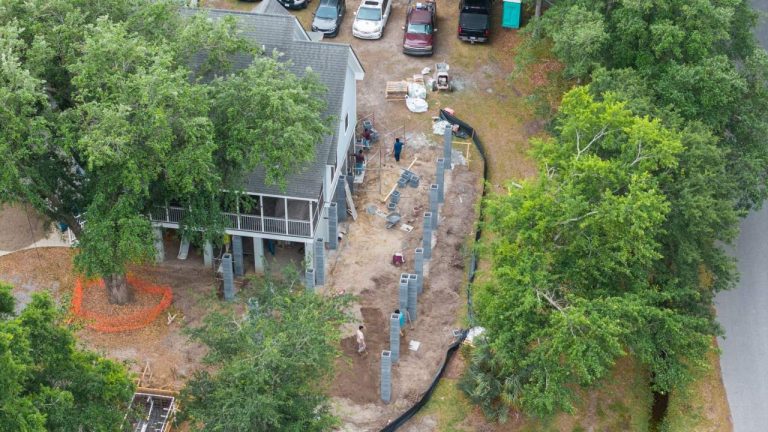
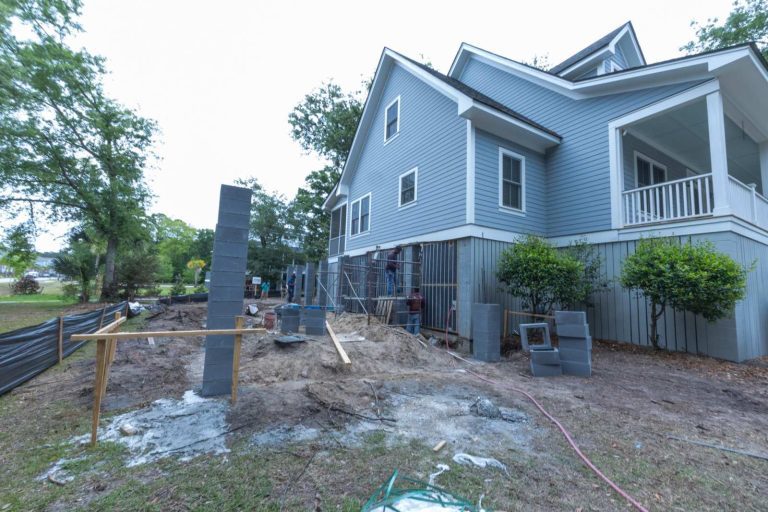
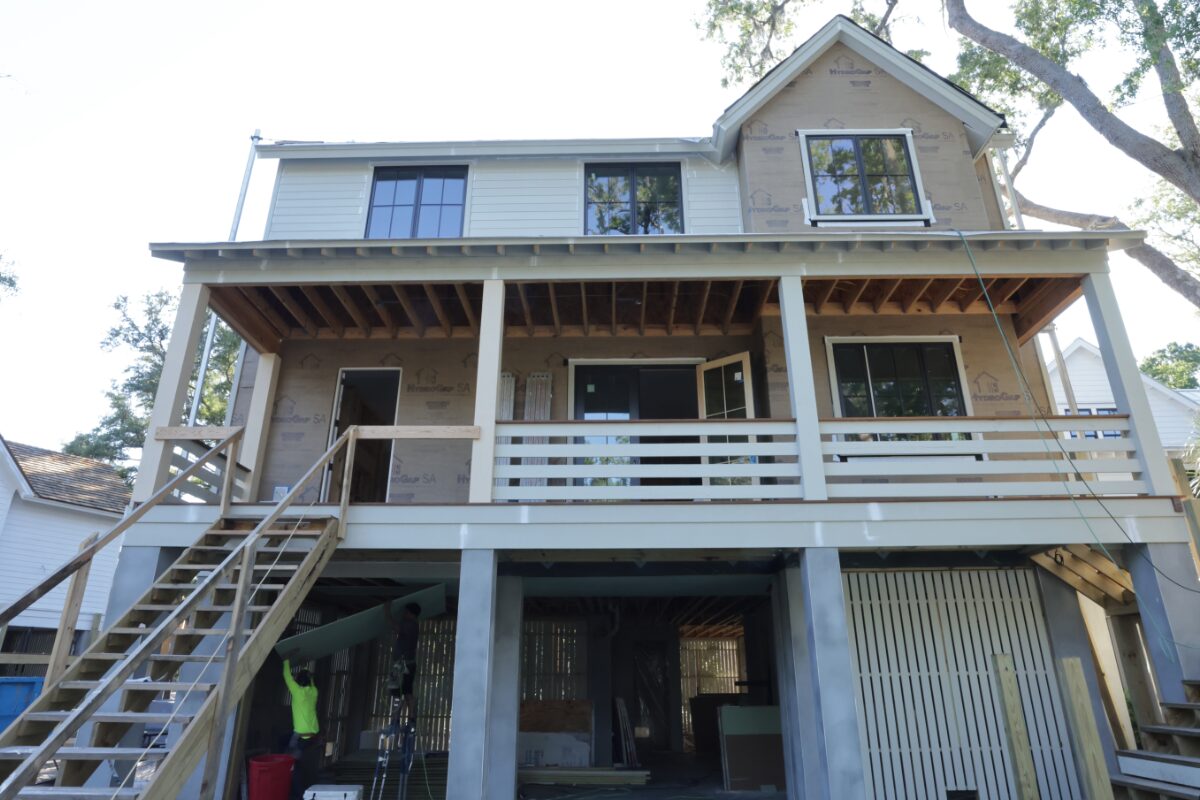
On the coast, it is also how you control what a spec builder decides for you: elevation and foundation, how the house handles wind and salt air, which way the porches face, and which trees stay.
That is the work we describe on our page for custom homes in Charleston: partnering with homeowners and architects from site selection through the final walk-through, including land evaluation and design coordination. It asks more of you in time and decisions, and it gives you a house no one else designed for a generic buyer.
The options in between
The choice is not always binary. A semi-custom home starts from an existing plan that you modify and finish to your taste, which can save design time while keeping some control. Buying a spec home early, before drywall, can let you choose finishes even though the layout is set.
A fully custom home is designed from scratch around your lot and the way you live. If you are leaning that way, our article on things to know before building a custom home in the Charleston area covers budgeting, construction financing and choosing a builder.
Three costs to price honestly before you choose
- The lot and its preparation. Survey, soil and drainage, utilities, tree protection and, in flood-prone areas, the foundation height the site requires. A spec price has already absorbed these; a custom budget must add them.
- The months in between. While a custom home is designed and built, you keep paying for where you live now, plus interest on the construction loan as draws are paid out. Ask your lender to lay this out before you compare.
- The selections not yet made. In a custom proposal, allowances stand in for finishes you have not chosen. Ask how each allowance was set and what happens if your choices land above or below it.
What drives the price of a custom house is the design itself: size and complexity, foundation type, the structural requirements of wind and flood zones, and the level of finish. None of that can be priced well without the lot and a plan in hand.
Building a custom home with Domus Built
We build a limited number of projects each year so that each one gets our team’s full attention. Every proposal sets out a detailed scope, a transparent budget with material allowances clearly disclosed, and a realistic schedule, and during construction you receive weekly progress reports with photo documentation.
If you own a lot, or are about to buy one, request a private consultation and we will walk the property with you before any plan is drawn.